Steel French Doors vs Wood and Fiberglass: Which Is Best for a Texas Patio?
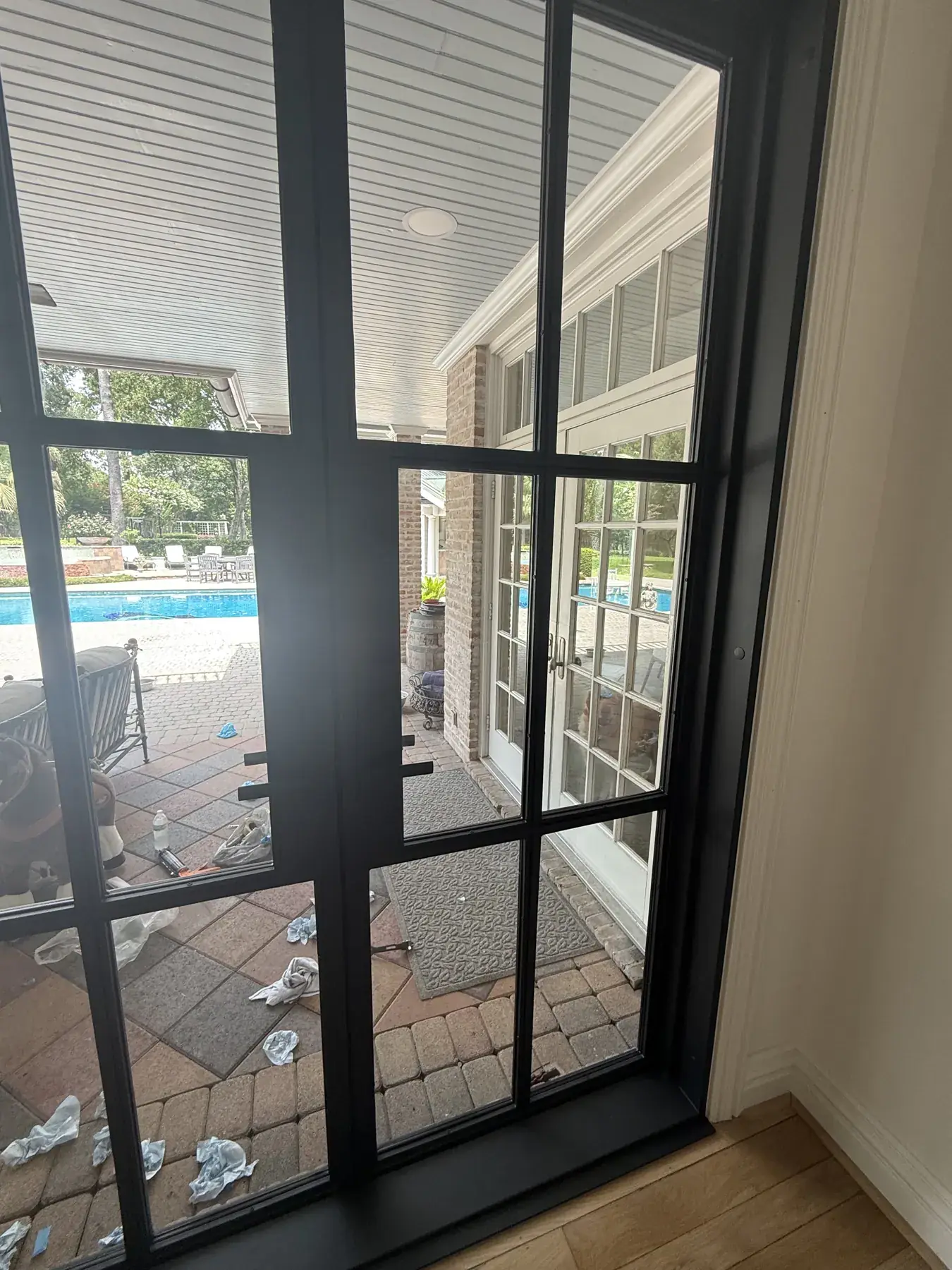
Exterior French doors are one of the most popular upgrades on Texas homes: a pair of glass doors opening the living room to the patio, the pool or the courtyard. The big decision is the material. Here is how steel (often sold as iron or metal French doors) compares with wood and fiberglass in our climate.
Steel and iron French doors
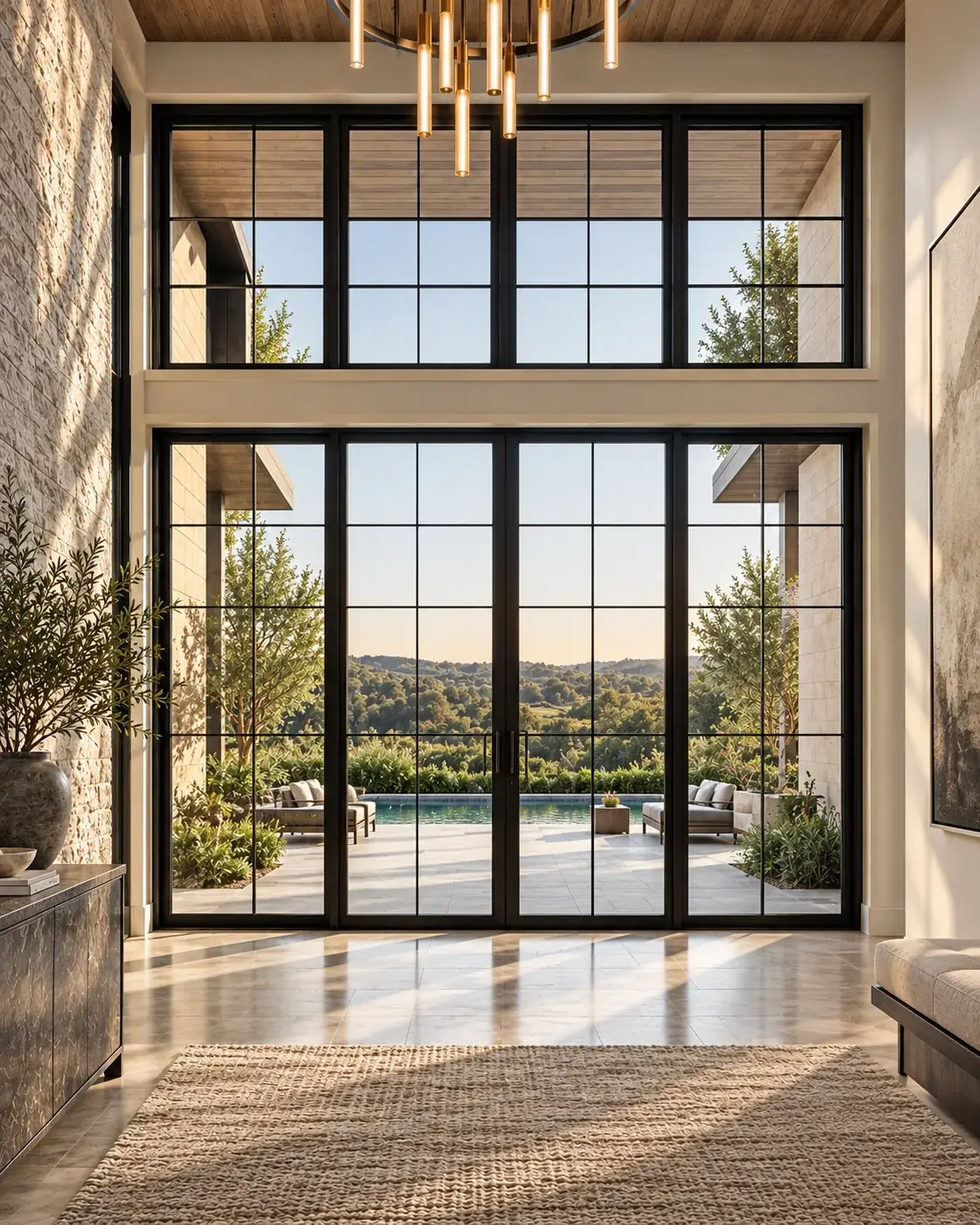
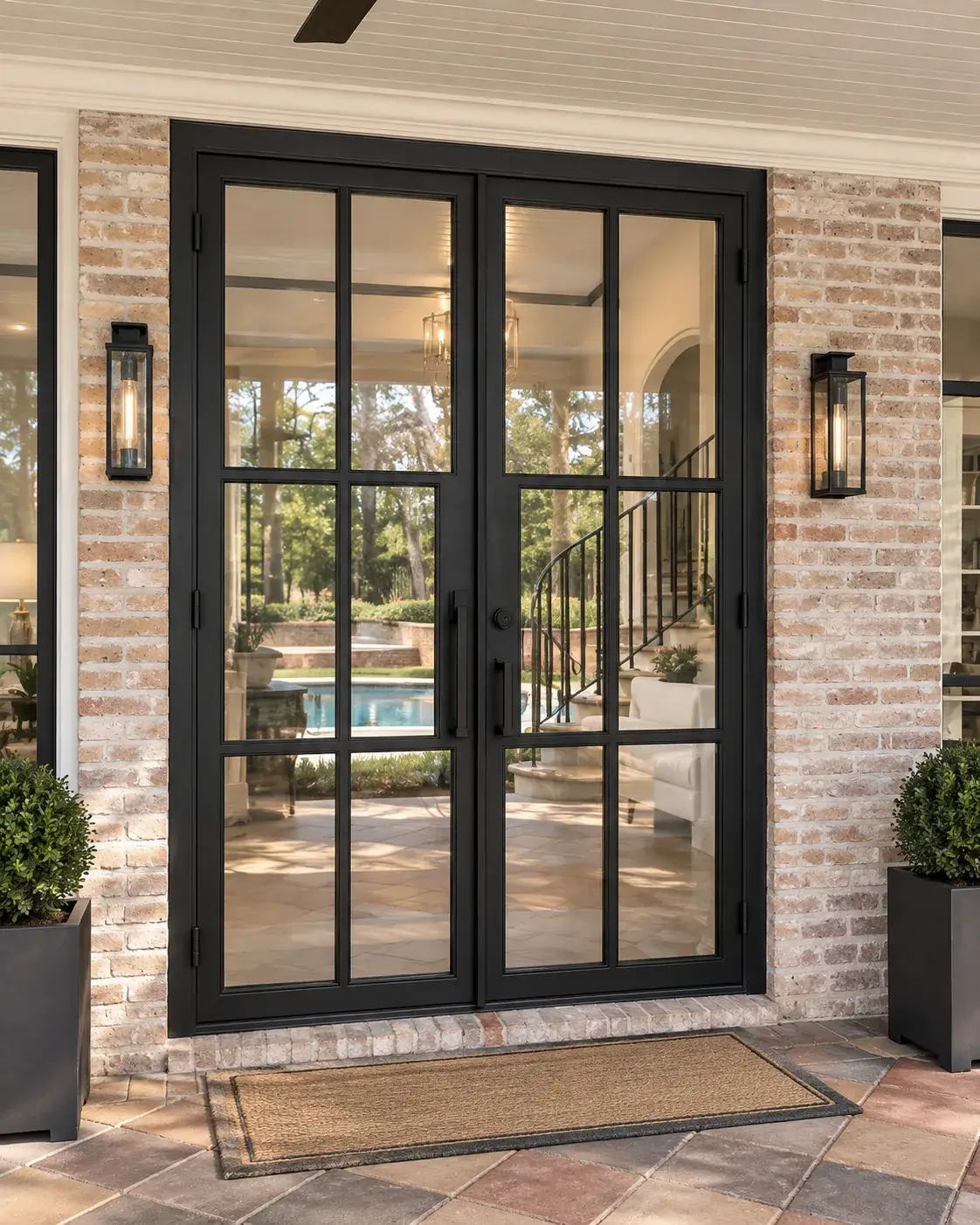
Steel French doors use a welded steel frame with slim profiles, usually finished in black, holding large panes of glass. Because steel is so strong, the frames can be much thinner than wood or fiberglass, so the opening reads as glass with fine black lines rather than a heavy frame. They are often called iron French doors or black French doors; the product is the same.
Steel does not swell, warp or rot, which matters on a patio that takes sun, rain and humidity for most of the year. The finish and the seals are what need attention. Steel also lets you build arched French doors, very tall pairs and multi-panel systems that would be hard to make stable in wood.
Wood French doors
Wood has a warm, traditional look and can be stained or painted. The trade-off in Texas is maintenance: wood exposed to humidity, sprinklers and direct sun needs refinishing regularly, and doors that swell and shrink with the seasons can stop sealing and start sticking. Wood frames are also thicker, so you get less glass in the same opening.
Fiberglass French doors
Fiberglass is durable, low-maintenance and insulates well. It does not rot or warp. Its limits are visual: frames are bulky compared with steel, simulated divided lites can look flat, and sizes and arched shapes are more limited because most fiberglass doors come in stock dimensions.
Side-by-side comparison
- Glass area: steel has the slimmest frames and the most glass; wood and fiberglass frames are wider.
- Humidity and rain: steel and fiberglass do not swell; wood can, especially on exposed patios.
- Upkeep: steel needs a clean finish and good seals; fiberglass needs little; wood needs regular refinishing.
- Design range: steel handles arched tops, tall pairs, divided lites and multi-panel layouts built to the opening.
- Security: a welded steel frame with multi-point locking is very rigid.
- Matching the house: steel French doors match iron and steel front doors and iron windows in the same finish.
- Cost: custom steel costs more than stock fiberglass or wood, and less than many people expect for a custom product.
Exterior French doors in the Texas climate
In Houston the challenge is moisture: rain driven against the house and humidity most of the year. In San Antonio, Austin and Dallas it is strong sun and big temperature swings. For any exterior French door, three details decide how it performs: a threshold that sheds water away from the house, weatherstripping that closes evenly, and glass chosen for the orientation. Low-E glass on west- and south-facing patios cuts heat gain noticeably.
Swing direction matters too. In-swing doors are common under covered patios; out-swing doors save interior space and resist wind-driven rain better on exposed walls.
Glass and grid options for steel French doors
Most of the personality of a French door comes from the glass layout. Steel lets you choose almost any grid: two tall panes per leaf for a clean modern look, four or six panes for transitional homes, or a full divided-lite pattern for traditional and European-style houses. Because the muntins (the bars between panes) are real steel, not strips glued onto the glass, the grid has depth and casts real shadow lines.
For the glass itself, clear glass keeps the view to the pool, rain or frosted glass works for bathrooms and street-facing doors, and Low-E insulated glass cuts heat gain on sunny patios. Matching the grid to your windows makes the back of the house look designed as one piece.
When aluminum is the better answer
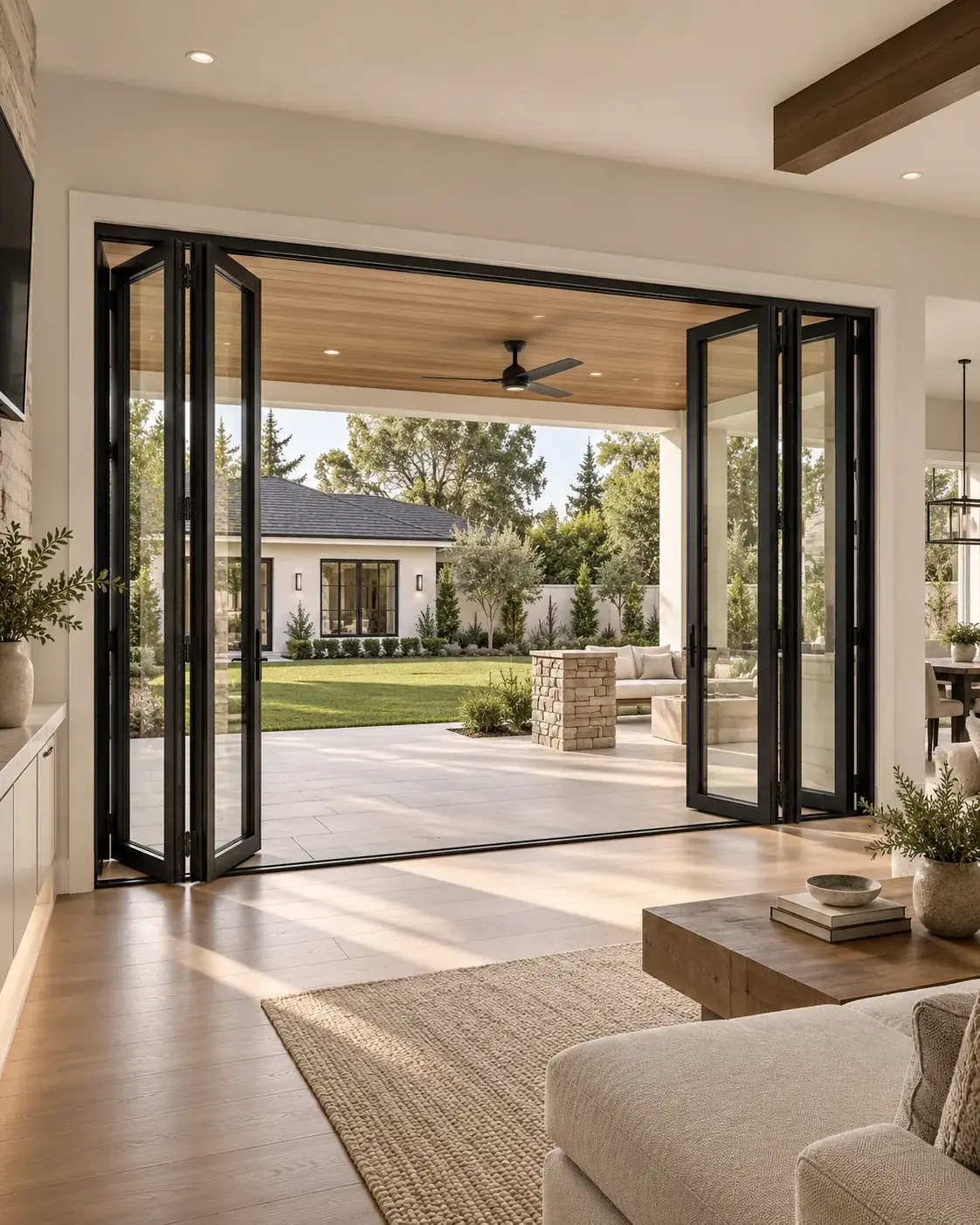
If the opening is very wide, or you want the whole wall to disappear, slim aluminum sliding doors (3 and 4 panel systems) or bifold patio doors may be the better choice. Many homes use steel French doors where the opening is a doorway and aluminum where the opening is a wall.
Next steps
See layouts and glass options on our iron and steel French doors page, check French door sizes before you measure, or send rough sizes and a photo through the quote form.
Frequently asked questions
Are steel French doors better than wood?
For Texas patios, steel holds up better to humidity and sun, needs less maintenance and gives you more glass. Wood looks warmer but needs regular refinishing.
Are iron French doors and steel French doors the same?
In practice, yes. Modern iron French doors are fabricated from steel; the names are used interchangeably.
Do steel French doors keep heat out?
Comfort depends mostly on the glass and the seals. Low-E insulated glass and good weatherstripping make the biggest difference on sun-facing patios.
Can you replace a sliding patio door with steel French doors?
Yes. We remove the slider and install French doors built to the same opening, with new sealing and trim.