Are Iron and Steel Doors Energy Efficient? Thermal Break Explained
Iron and steel doors are mostly glass and metal, and metal conducts heat. So are they a bad idea in the Texas heat? Not if they are specified correctly. Here is what a thermal break does, where it matters, and the choices that actually decide how comfortable your entry or patio will be.
What is a thermal break?
A thermal break is a strip of low-conductivity material, usually a dense polymer, that separates the outside part of a metal frame from the inside part. Without it, heat travels straight through the metal: on a summer afternoon the inside face of the frame gets warm, and on a cold morning it can collect condensation. With it, the frame behaves more like an insulated assembly.
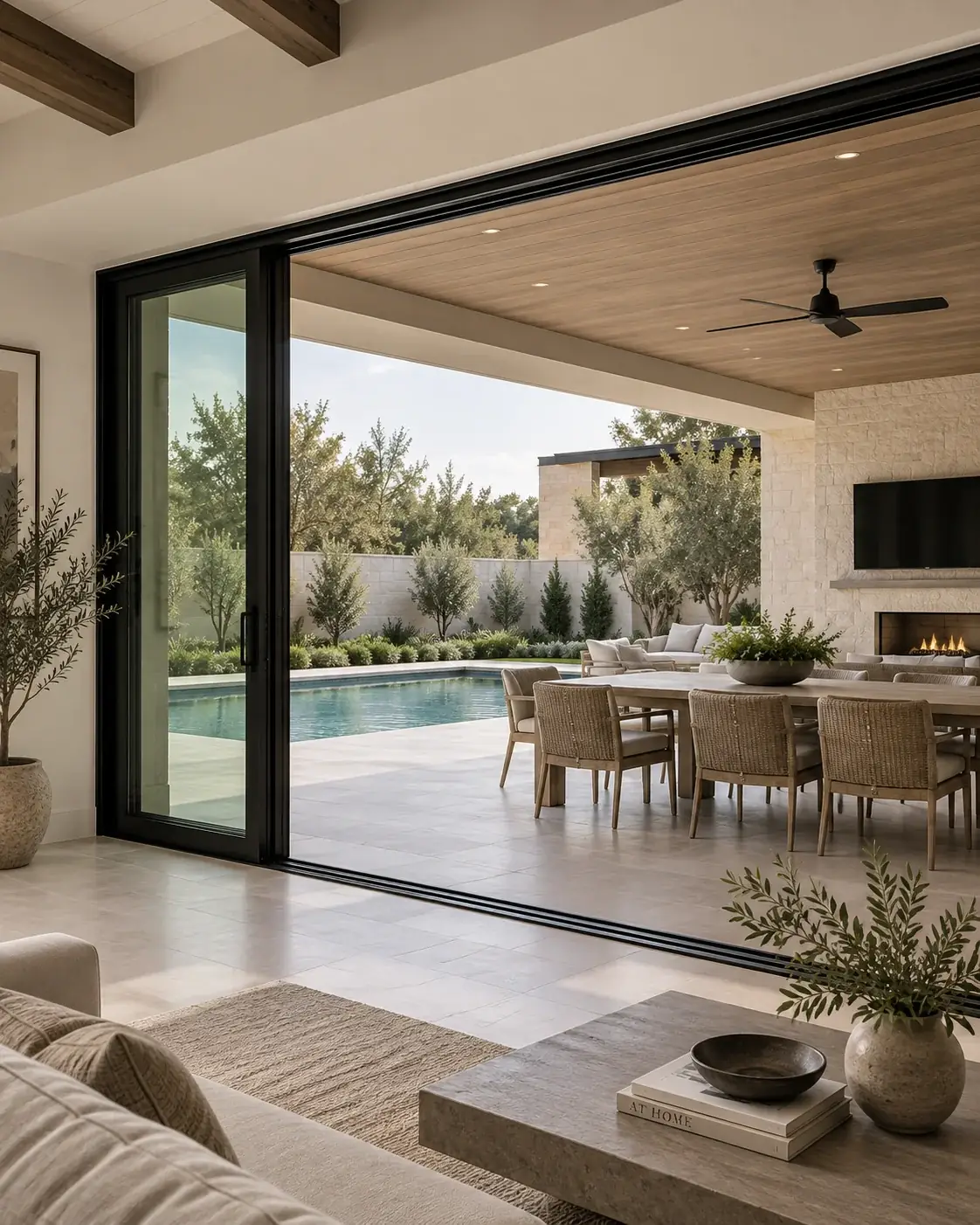
Thermal breaks are standard in quality aluminum windows and doors, because aluminum conducts heat very easily. Our aluminum sliding doors, bifold doors and aluminum windows use thermally broken frames for exactly that reason.
How iron and steel compare
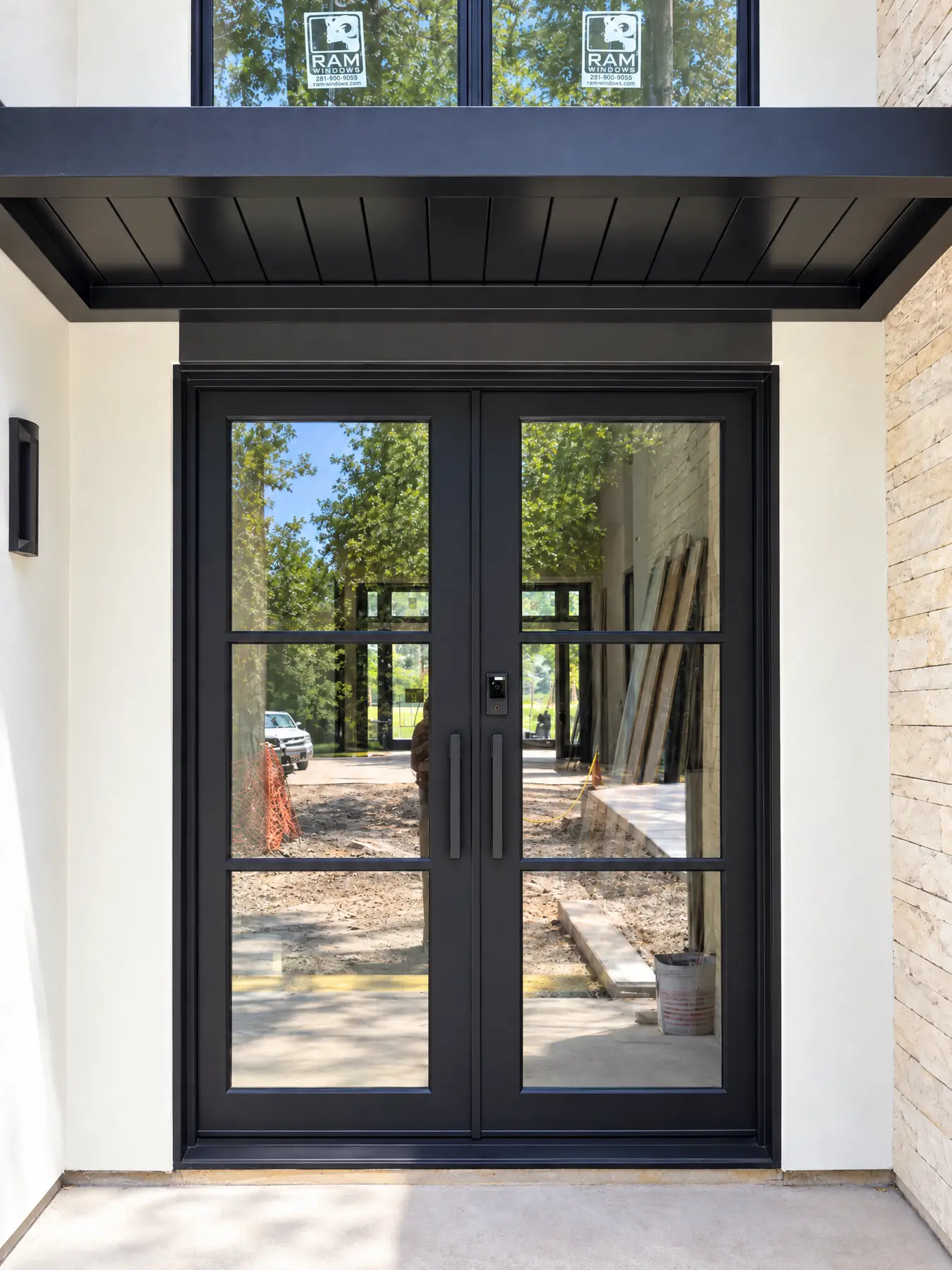
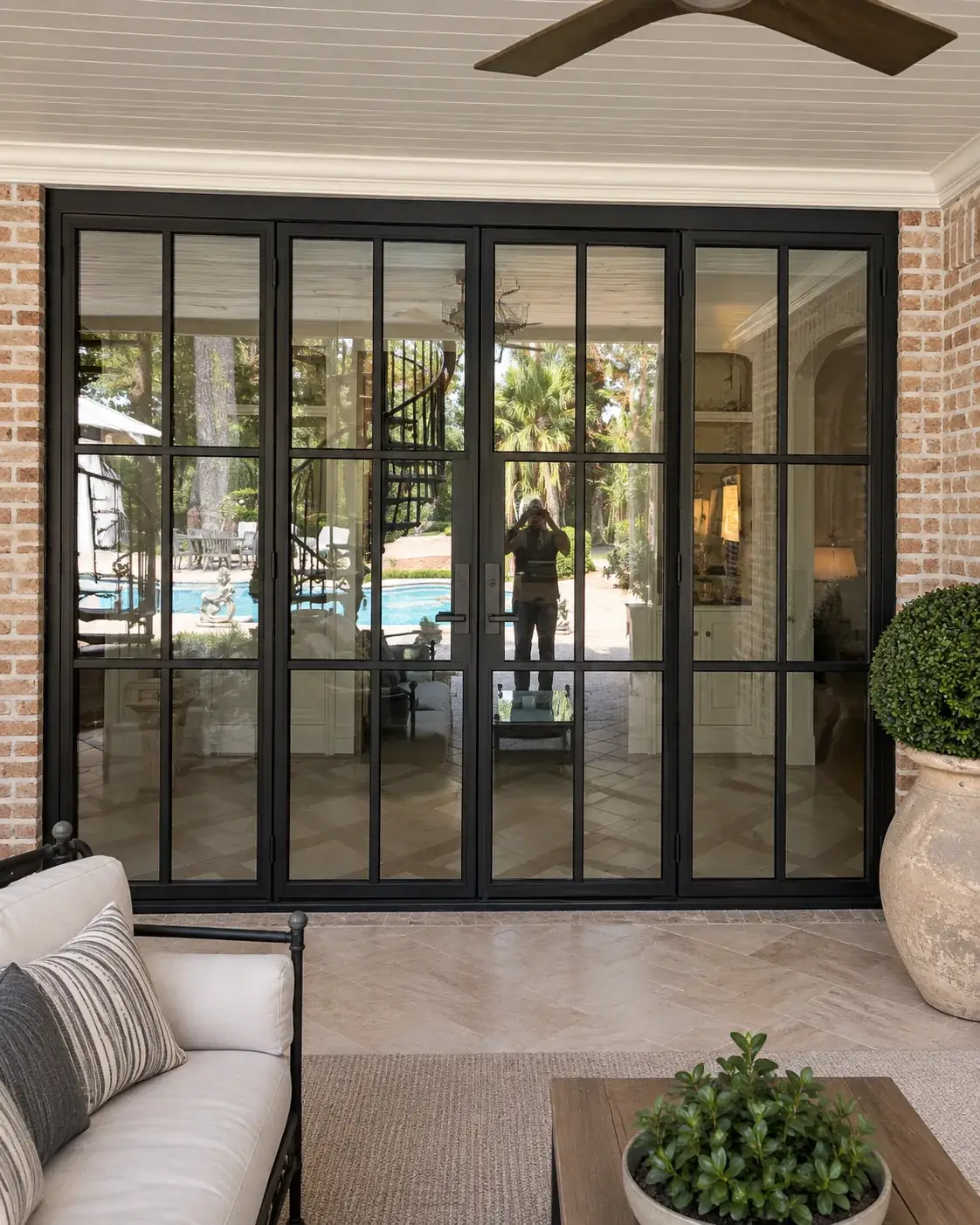
Steel, the material behind modern iron doors, conducts heat far less than aluminum, though more than wood or fiberglass. Steel door frames are also slim, which means the frame is a small share of the total door area. On a typical iron or steel glass door, the glass covers most of the surface, so the glass you choose has a bigger effect on comfort than the frame.
Blackline builds thermally broken iron and steel doors on request. A thermal break adds cost, and it pays off most on large glass doors, sun-facing entries and homes where every bit of efficiency counts. In much of Texas, where cooling is the main concern, glass and sealing still do most of the work, so we look at all three together. Ask for a thermal break when you request a quote and we will price it alongside the standard frame.
Glass does the heavy lifting
- Insulated glass: two panes with a sealed space between them slow heat transfer much more than a single pane.
- Low-E coatings: a thin coating that reflects infrared heat. In Texas, choose a Low-E glass with a low solar heat gain rating for west- and south-facing doors.
- Tint and texture: rain or frosted glass adds privacy; tints reduce glare on very sunny entries.
- Orientation: a north-facing door or one under a deep porch gets far less direct sun than a west-facing entry, and can use clearer glass.
Sealing and installation
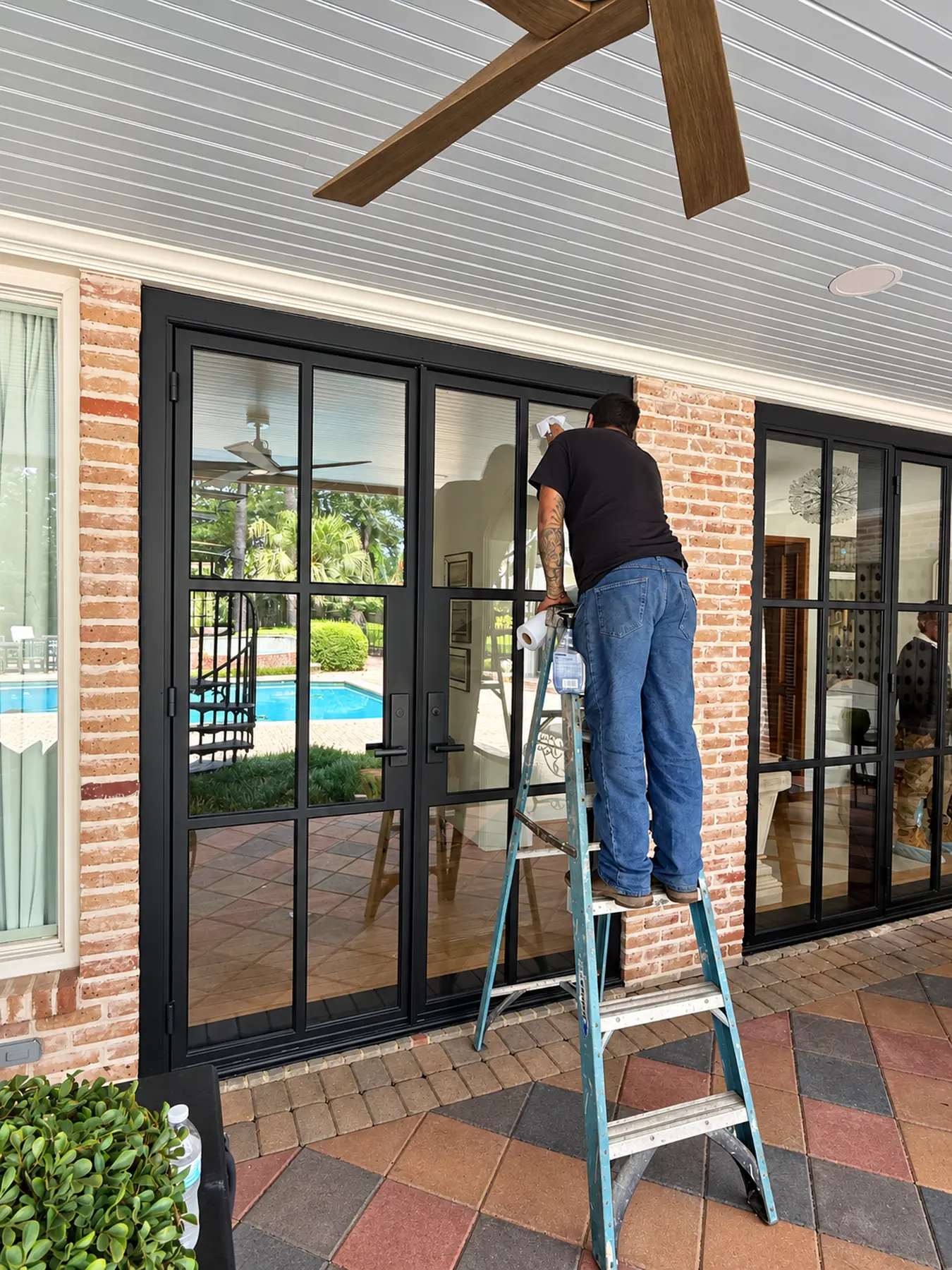
Air leaks waste more energy than conduction through a frame. A door that does not close evenly, or a frame that is not sealed to the wall, lets hot humid air in all summer. That is why the details matter: weatherstripping that compresses evenly around the door, a threshold that seals at the bottom, and a frame set level and sealed by the installer.
Check the seals once or twice a year. Close the door on a sheet of paper at several points; if it slides out easily, the seal needs adjustment. Our guide to iron door care in Texas has a simple checklist.
Common myths about metal doors and energy
- "Metal doors make the house hot." A poorly sealed door with single-pane glass will. A sealed steel door with insulated Low-E glass performs very differently.
- "Only thermal breaks matter." On a glass door, the glass and the seals usually matter more than the frame, especially in a cooling climate like Texas.
- "Dark frames absorb too much heat." Black frames do warm up in direct sun, but a covered entry, a good finish and the right glass keep the foyer comfortable.
- "Energy efficiency means small windows." Large glass doors can be comfortable when the glass is chosen for the orientation of the opening.
What this means in Houston, San Antonio, Austin and Dallas
In Houston, humidity is the main issue: a well-sealed door keeps moist air out and prevents condensation inside. In San Antonio and Austin, strong sun on west-facing fronts makes Low-E glass the priority. In Dallas–Fort Worth, wider temperature swings make good seals and insulated glass important in both summer and winter.
In every case, a custom door built to the opening seals better than a stock door forced into an existing frame. See custom iron and steel doors in Houston or our iron and steel entry doors, and send your opening through the quote form for glass recommendations with your estimate.
Frequently asked questions
Are iron doors energy efficient?
They can be. With insulated Low-E glass, good weatherstripping and a sealed installation, iron and steel doors keep a Texas home comfortable. The glass matters more than the frame.
What is a thermal break in a door?
An insulating strip that separates the outside and inside parts of a metal frame so heat does not pass straight through the metal.
Do you make thermally broken iron doors?
Yes. Blackline builds thermally broken iron and steel doors on request. Ask for it when you request a quote and we price it alongside the standard frame.
Do I need a thermal break in Texas?
It helps most on large glass doors and sun-facing entries. Low-E insulated glass and good seals also make a big difference, so we recommend looking at all three together.
Which glass is best for a west-facing door?
Insulated glass with a Low-E coating and a low solar heat gain rating. Add rain or textured glass if you also need privacy.